
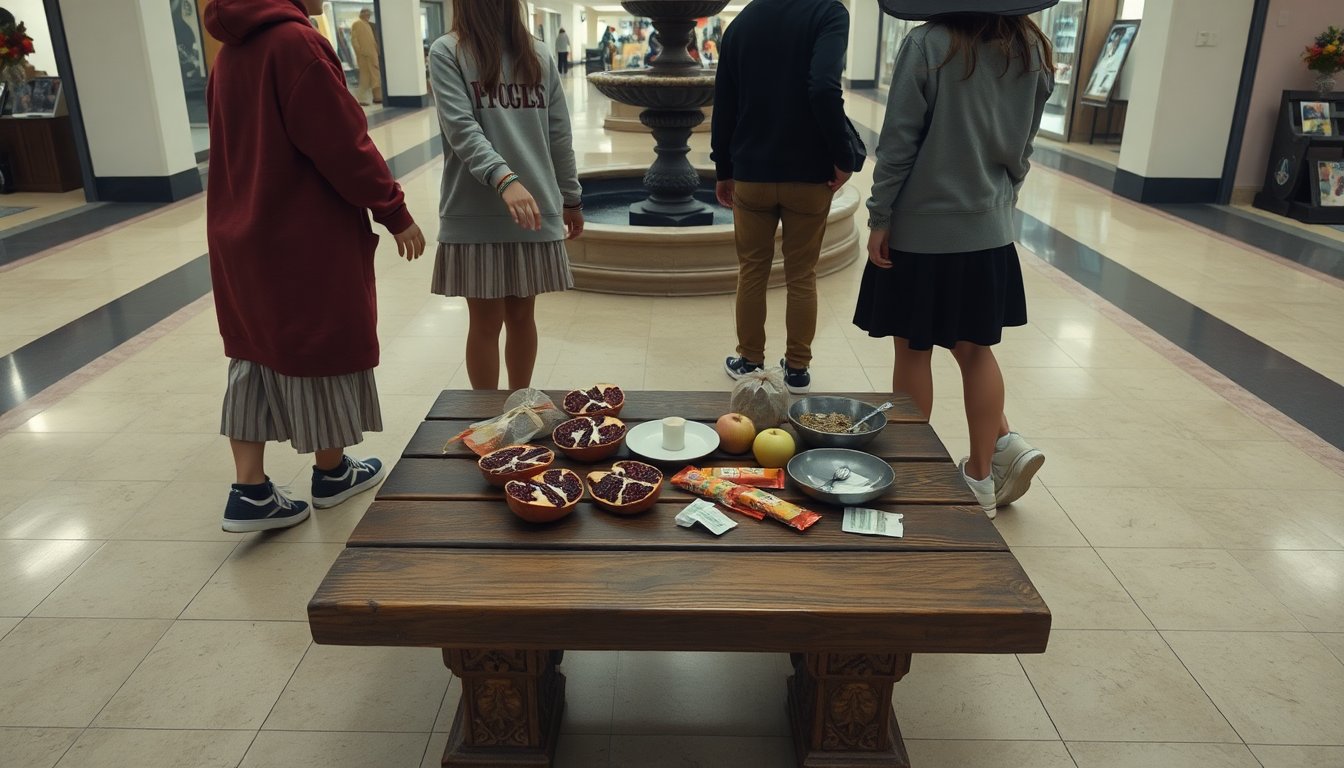
The arrival of Forbidden Fruits — Meredith Alloway’s feature debut — has produced a lively debate: is this witchy mall satire already a cult classic? The movie, backed by Shudder and the Independent Film Company, premiered to strong chatter at SXSW and opened with about $1.2 million in its first weekend. With an ensemble that includes Lili Reinhart, Victoria Pedretti, Lola Tung, and Alexandra Shipp, the film combines horror, camp and teenage social dynamics inside a nostalgic Dallas mall setting. Still, fans and critics racing to brand it a cult phenomenon raise questions about what that term truly means and who gets to decide it.
At the same time, the movie’s backstory — adapted from Lily Houghton’s play Of the woman came the beginning of sin, and through her we all die — and Alloway’s own memories of Texas malls give the piece a clear creative throughline. It’s also a polished production: notable costume elements, publicity tie-ins like a beauty collaboration, and festival acclaim have all helped the film register quickly. But rapid visibility is different from slow cultural adoption. The conversation around Forbidden Fruits now sits at the intersection of sincere fandom, savvy marketing and online virality.
What a cult classic really is
The phrase cult film often carries more mythology than definition. In practice, a cult classic is not measured by opening figures but by the ritual and devotion that develop around a title over years — repeated viewings, fan performances, quotable moments and a community that reclaims the work. Historical examples include The Rocky Horror Picture Show, which grew into midnight screenings and audience participation, and Ginger Snaps, whose reputation was cultivated over time by committed fans. More recent indie projects like The People’s Joker or festival hits that toured internationally also shaped their legacies through prolonged, grassroots engagement rather than a single weekend’s buzz.
Forbidden Fruits at the start line
It helps to separate the film’s promising launch from anointing its long-term cultural status. The movie’s mixture of body-horror-inflected metaphors about girlhood and a tightly curated aesthetic gives it immediate appeal for certain audiences. Yet calling it an instant cult classic can function as an optimistic wish or, alternatively, as a marketing shorthand. A polished campaign and mainstream-savvy cast can move a project into public view quickly, but they don’t replicate the organic discovery process that underpins most genuine cult followings. Right now, Forbidden Fruits sits in a middle ground: noticed and discussed, but not yet canonized.
From play to mall: origins and setting
The screenplay began life with Lily Houghton’s stage piece and evolved with Alloway’s impulse to relocate the action to Dallas. By setting the story inside a store called Free Eden in a mall, Alloway taps into a specific cultural ecology: the food court, neighboring shops and late-night mall rituals become part of the film’s texture. The fruit-named characters — Cherry, Apple, Fig and Pumpkin — and the coven dynamic gain extra resonance against that suburban retail backdrop. Alloway’s upbringing in Dallas and training (including time at Lake Highlands High School and SMU) informed the film’s local color, making the environment feel like a character in itself.
Wardrobe and world building
Costume and collaborative design choices reinforced the film’s identity. After some persistence, designer names associated with Rodarte contributed to a look that leans into romantic, occult femininity, and the cast helped shape their roles with personal input. That emphasis on bespoke visual language is part of how a film invites fans to participate: when viewers can replicate a look or dress as a character for screenings, the movie becomes a shared experience. This kind of world building is essential to cult growth, but it starts with grassroots adoption rather than top-down campaigns.
Marketing, virality and the danger of early labels
Social platforms, especially TikTok, can accelerate attention quickly, turning clips into conversation and images into trends. However, virality is ephemeral: a flourishing hashtag this week does not guarantee a ritualized audience in ten years. Labeling Forbidden Fruits a cult property while the publicity cycle is still active risks converting what should be an emergent cultural process into a branding exercise. For films rooted in subculture or queer and female-driven perspectives, prematurely framing success as niche can also unintentionally cap expectations about broader cultural reach.
A patient case for lasting admiration
No one says the film can’t achieve the kind of devotion that defines a true cult classic. Maybe audiences will soon ritualize an escalator gag, a costume moment or a memorable line into regular practice. Or maybe the film will remain a lively, well-loved piece of contemporary teen-horror cinema without developing a decades-long cult life. The responsible stance is to let that organic process unfold: celebrate the movie’s strengths — the performances, the setting, and Alloway’s vision — while resisting the urge to artificially fix its place in cinema history. Time, repeated viewings and community adoption will be the real arbiters of whether Forbidden Fruits becomes a true cultural touchstone.