
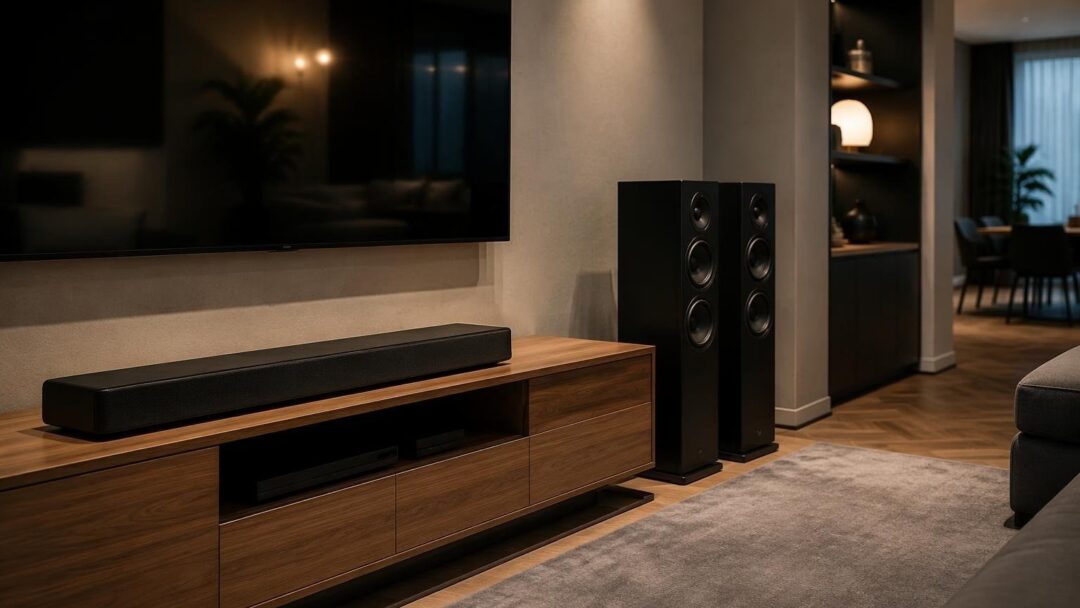
When it comes to creating an immersive audio experience, Dolby Atmos is a popular choice among home entertainment enthusiasts. The technology offers a three-dimensional sound field, providing a more engaging and realistic listening experience. However, with various Dolby Atmos soundbars and systems available, choosing the right one can be overwhelming. In this article, we will delve into the key differences between Dolby Atmos soundbars and systems, considering factors like channel count, upfiring drivers, room size, and placement.
To start, it’s essential to understand the basics of Dolby Atmos. The technology uses object-based audio where sound is assigned to specific objects in a scene, rather than traditional channel-based audio. This allows for a more precise and immersive sound field. Dolby Atmos soundbars and systems typically include upfiring drivers which bounce sound off the ceiling to create the illusion of height.
Channel Count and Configuration
One of the primary differences between Dolby Atmos soundbars and systems is the channel count. A 5.1.2 system, for example, includes five full-range channels, one subwoofer channel, and two height channels. In contrast, a 7.1.4 system includes seven full-range channels, one subwoofer channel, and four height channels. When choosing a Dolby Atmos soundbar or system, consider the size of your room and the number of seating positions. A larger room with multiple seating positions may require a more extensive system with a higher channel count.
Room Size and Placement
Room size and placement are critical factors to consider when setting up a Dolby Atmos system. A smaller room may be better suited for a Dolby Atmos soundbar, while a larger room may require a more extensive system with separate speakers. It’s also essential to consider the placement of speakers, including the upfiring drivers. Ideally, these drivers should be placed at ear level or slightly above, angled to bounce sound off the ceiling.
Room Correction and Calibration
To ensure optimal performance, it’s crucial to calibrate your Dolby Atmos system. This involves adjusting the speaker levels, delay, and EQ to compensate for the room’s acoustics. Many Dolby Atmos systems include room correction features, such as Audyssey MultEQ or Dirac Live. These features use a microphone to measure the room’s acoustics and adjust the speaker settings accordingly.
Upgrade Paths and Considerations
When upgrading to a Dolby Atmos system, consider your existing equipment and the potential for future upgrades. If you already have a 5.1 system, you may be able to add upfiring drivers or a separate Dolby Atmos module to create a 5.1.2 system. However, if you’re starting from scratch, it may be more cost-effective to invest in a complete Dolby Atmos system.
Decision Matrix for Renters vs Homeowners
Finally, it’s essential to consider your living situation when choosing a Dolby Atmos soundbar or system. Renters may prefer a Dolby Atmos soundbar, which is typically more compact and easier to install. Homeowners, on the other hand, may have more flexibility to install a more extensive Dolby Atmos system. When deciding between a soundbar and a system, consider factors like room size, channel count, and upgradability.


