The opening installment of Ramayana: Rise of a Legend arrives as a massive undertaking, aiming to transpose Valmiki’s ancient Sanskrit epic onto a modern, IMAX-compatible canvas. Directed by Nitesh Tiwari and co-written with Shridhar Raghavan, the film splits the story into two parts, with the first stretching to 195 minutes in its original Hindi version. For Western audiences a trimmed 167-minute English dub exists, employing AI-enhanced lip-sync—a controversial choice that sparked debate among purists. My analysis follows the uncut Hindi cut, the version that showcases the director’s full vision.
From the very first frame, the ambition is unmistakable. The opening half-hour serves as a mythic prelude, introducing Brahma, Shiva, Vishnu, the three realms, and a spectacular battle featuring a winged elephant. The narrative quickly shifts to the rise of the Asura king Dashanan, later known as Ravana (portrayed by Yash, voiced in the English version by Sharad Kelkar). This prologue, while dense, establishes the cosmic stakes: Ravana’s quest for domination of the three worlds and the divine response that will manifest as the avatar of Vishnu, Prince Rama (Ranbir Kapoor).
Visual ambition and scale
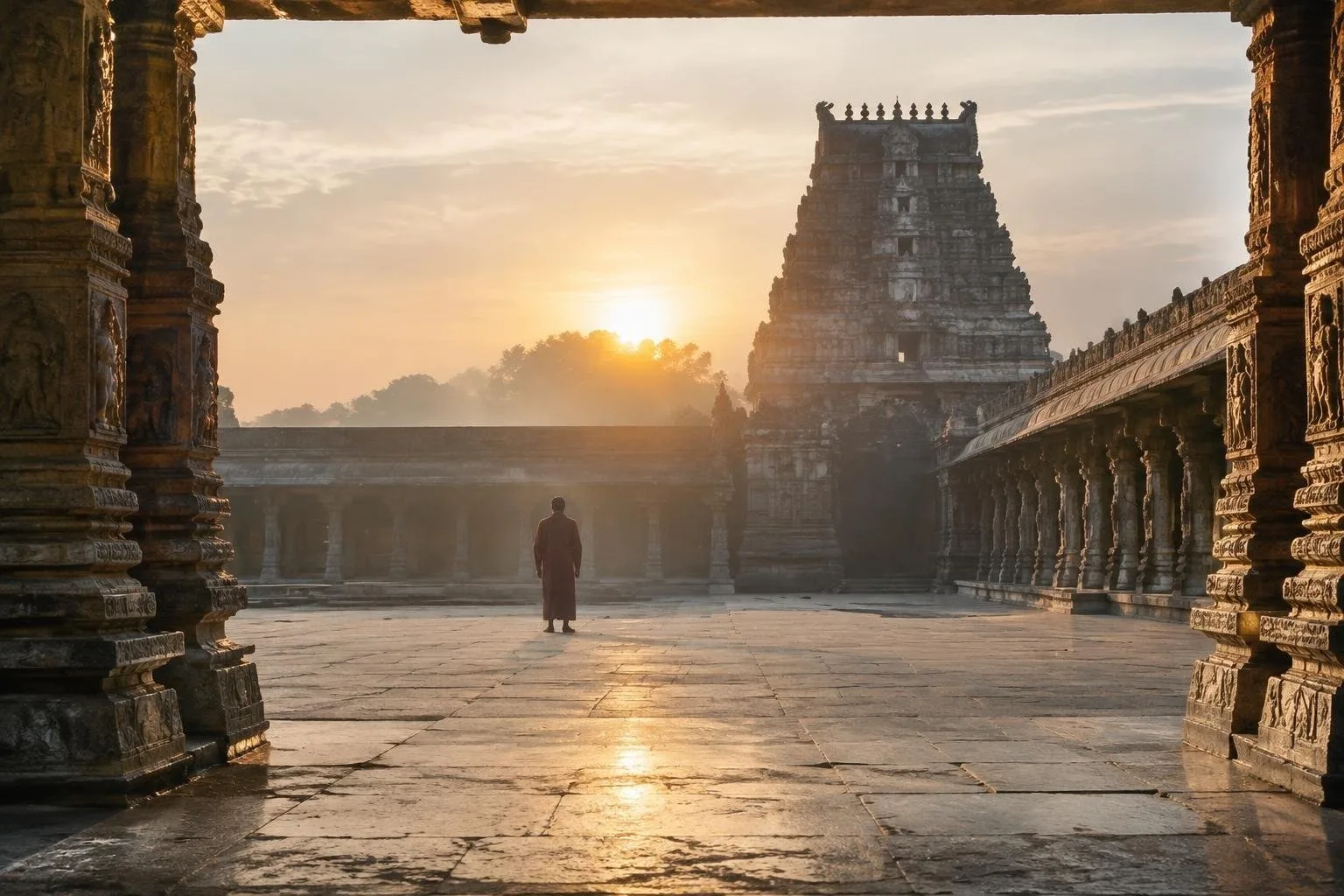
Visually, the film is a tour de force. Shot entirely with IMAX cameras and rendered in 3D, it rivals the grandeur of Peter Jackson’s The Lord of the Rings and Denis Villeneuve’s Dune. Production designer Ramsey Avery, known for his work on The Lord of the Rings: The Rings of Power, crafts sprawling palaces, cursed forests, and airborne chariots that feel both mythic and hyper-real. Motion-capture consultant Terry Notary choreographs the massive battle sequences, while the visual effects house delivers a constant stream of CGI that, at times, borders on excess but never fully distracts from the story’s mythic core.
Key set pieces—such as Ravana’s self-punishment tree and the aerial duel over Lanka—demonstrate a mastery of scale, with each frame packed with detail. The film’s color palette shifts between the luminous Deva realm and the shadow-laden Asura territories, reinforcing the moral dichotomy without resorting to heavyhanded symbolism. The soundtrack, co-composed by A.R. Rahman and Hans Zimmer, underscores these visuals with relentless energy, though moments of silence are occasionally underused, leaving some emotional peaks feeling less resonant than they could be.
Storytelling and character dynamics
Narratively, the adaptation takes considerable liberties with Valmiki’s text, weaving together regional variants to create a more pluralistic version of the tale. This approach yields fresh character angles: Ravana is portrayed as a charismatic liberator rather than a one-dimensional monster, while Sita (Sai Pallavi) exhibits a pragmatic form of feminism, actively participating in combat rather than remaining a passive figure. The film also gives space to Lakshmana (Ravi Dubey), whose slight imperfections balance Rama’s near-perfect virtue, providing the audience with a more relatable hero.
However, the expansive scope contributes to pacing issues. The first act is heavily exposition-laden; the 30-minute prologue dumps mythological lore that can overwhelm viewers unfamiliar with the source material. Subsequent sections try to maintain momentum with elaborate set-pieces, but the relentless tempo occasionally sacrifices character interiority. Scenes that could have benefited from quieter moments—such as the developing romance between Rama and Sita—are compressed, leaving emotional beats feeling rushed. The result is a film that dazzles the senses but sometimes falters in narrative cohesion.
Technical craftsmanship and political undertones
Beyond spectacle, the film embeds subtle political commentary. By presenting multiple retellings of the Ramayana, it nods to the epic’s oral tradition, reminding audiences that the story has always been fluid and contested. This choice can be read as a quiet defiance against contemporary attempts to cement a singular, nationalist interpretation of the myth. The visual language supports this reading: the perspective of Jatayu, the fallen vulture, frames the conflict in a sympathetic, almost proletarian light, contrasting with the typical “divine-right” gaze.
From a technical standpoint, the collaboration of Hollywood veterans with Indian talent yields a hybrid aesthetic. The action choreography borrows from Marvel-style spectacle, while still honoring traditional Indian cinematic rhythms. Yet the sheer budget—approximately 4,000 crore rupees (around $500 million)—does not guarantee flawless execution. Certain CGI moments, especially the demon makeup, suffer from repetition, and the AI-dubbed English version loses some of the original performances’ nuance.
In sum, Ramayana: Rise of a Legend succeeds in translating an ancient myth into a modern blockbuster canvas. Its visual ambition, stellar performances—particularly Yash’s electrifying Ravana Tandava—and the daring decision to pluralize a sacred narrative outweigh its structural sluggishness and occasional overreliance on CGI. Audiences leave the theater awed, anticipating how Part 2 will resolve the epic’s sprawling threads.