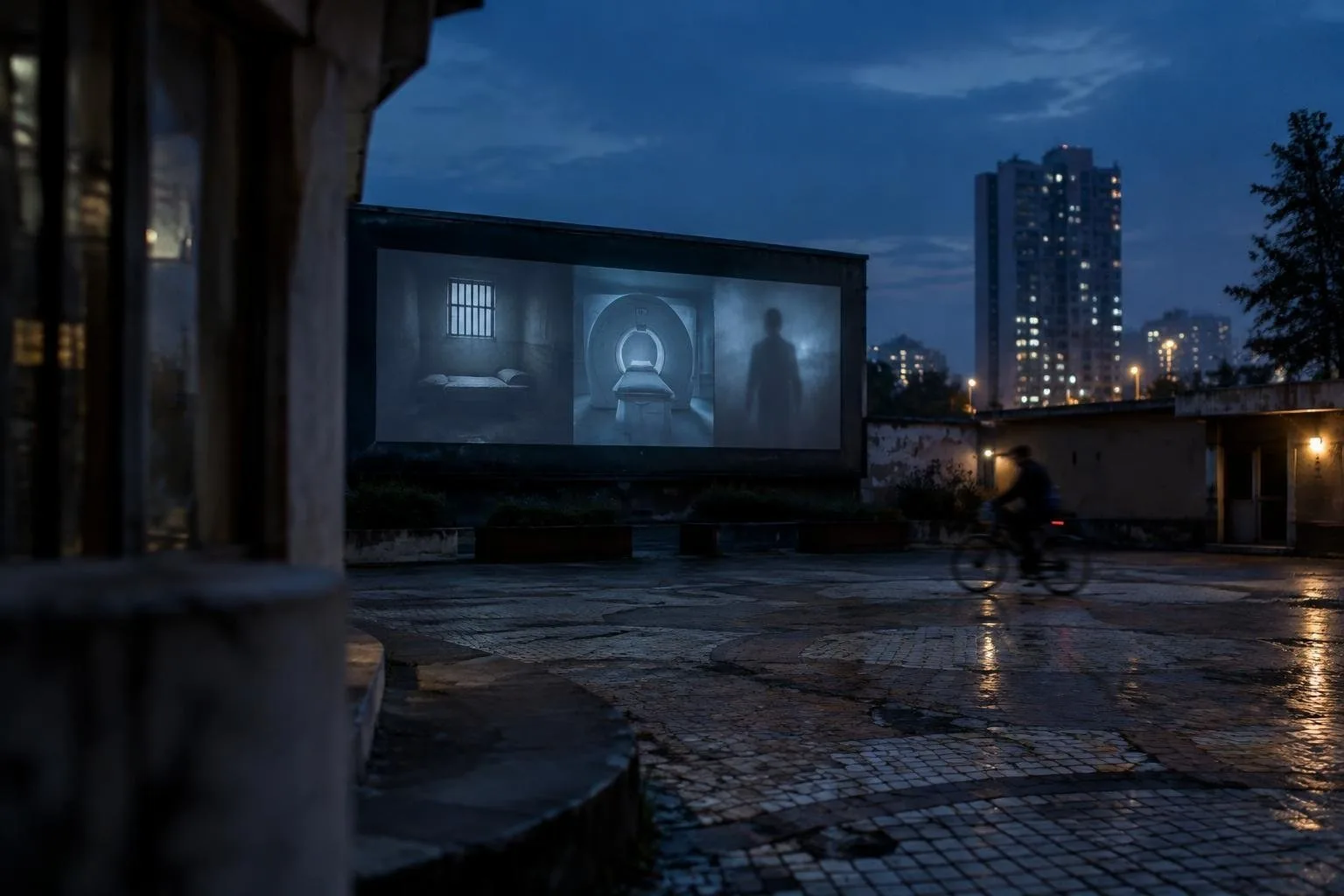
The autumn of 2026 brings a trio of films that could not be more disparate in tone, setting, and intention. One is a painstakingly staged interrogation drama set in a 1930s Soviet prison, another a deeply personal documentary about bowel cancer, and the third a supernatural horror that twists the notion of desire into terror. All three were released within a few months of each other, yet each has sparked conversation far beyond the usual promotional circuit.
What unites them is not genre but a willingness to confront uncomfortable subjects head-on. Whether it is the ideological baggage of a right-wing screenwriter, the raw vulnerability of a filmmaker confronting his own mortality, or a YouTube creator turning a viral concept into full-blown cinema, each project tests the limits of audience tolerance and critical patience.
Confession – a Stalin-era interrogation drama
Directed by Václav Marhoul and scripted by controversial commentator Ben Shapiro, Confession places former literature professor Alexei (Rob Lowe) in the infamous Lubyanka Prison of 1938 Moscow. Charged with counter-revolutionary activity, Alexei faces his former prize student Vladimir (James Franco) in a grueling series of interrogations that feel more like a literary salon than a torture chamber. The screenplay is littered with references to Dostoevsky, Pushkin, and Tolstoy, turning the interrogation room into a stage for endless philosophical monologues.
Visually, cinematographer Peter Menzies Jr. supplies a stark, grainy palette that underscores the claustrophobic setting. Supporting actors—Nick Nolte as a Jewish inmate, Emile Hirsch as a former concert pianist, and Richard Brake as a cynical prisoner—offer moments of intensity, but the film’s relentless 132-minute runtime drags. The dialogue often stalls into self-indulgent exposition, leaving the audience yearning for narrative propulsion. In the end, Confession feels like a showcase for the cast’s erudition rather than a compelling story about survival under Stalinism.
1 in 2 – a candid fight against bowel cancer
Documentarian David Wilkinson turns the camera on himself for 1 in 2, revealing that he was diagnosed with stage-four bowel cancer while making the film. The documentary doubles as a personal plea and an investigative piece into why this disease, once thought to affect primarily seniors, is now appearing in people in their 20s, 30s, and 40s. Wilkinson interviews survivors, medical professionals, and a strikingly honest young woman named Milli Tanner, whose openness about misdiagnosis highlights systemic age bias in symptom assessment.
The film balances somber statistics with moments of dark humor, creating a tone that is both compassionate and unflinching. Wilkinson’s on-camera presence is unmistakably first-person, a rarity in documentary cinema where the filmmaker often remains invisible. By championing the NHS bowel-cancer screening kit and urging viewers to abandon denial, the documentary becomes an urgent call to action. Though lacking the backing of major British film institutions, its authenticity resonates, making it a standout entry in contemporary health-focused filmmaking.
Obsession – a horror story of twisted desire
Written and directed by YouTuber-turned-filmmaker Curry Barker, Obsession explores the dark side of bodily autonomy through a supernatural premise. Protagonist Baron “Bear” Bailey (the titular Bear) discovers a novelty toy called the “One Wish Willow” that grants a single wish. After wishing that Nikki Freeman loves him more than anyone, the wish reshapes her reality: she becomes a compliant, physically attached partner who cannot leave his side, even as she silently screams for death.
The film’s horror derives not from monsters but from the unsettling normalcy of Bear’s behavior. He is an ordinary man, not a mythic creature, whose entitlement morphs into abuse. Scenes of Nikki’s forced compliance, her eventual pleas for death, and a customer-service revelation that only death can break the spell, all foreground the film’s critique of toxic masculinity and sexual violence. While the supernatural element adds a veneer of genre convention, the true terror lies in the plausibility of everyday coercion, making Obsession a disturbing, conversation-provoking entry for the horror calendar.
Taken together, these three releases illustrate how contemporary cinema can serve as both mirror and magnifying glass for society’s most pressing anxieties. Whether through a historically anchored drama, a brutally honest health documentary, or a modern horror allegory, each film pushes viewers to examine uncomfortable truths.