
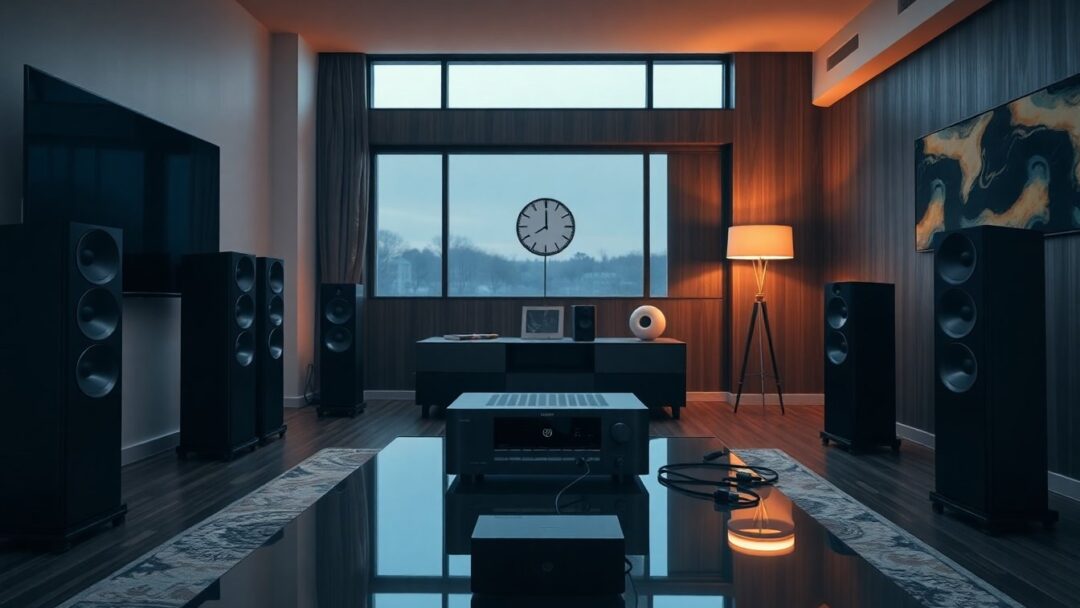
Setting up a Dolby Atmos system at home can be a daunting task, but with the right guidance, it can be a straightforward process. The first step is to understand the basics of Dolby Atmos and how it differs from traditional surround sound systems. Object-based audio is a key concept in Dolby Atmos where sound is not just limited to channels, but can be precisely placed in 3D space.
Upgrading from 5.1 to 7.1.4
For those looking to upgrade from a 5.1 system to a Dolby Atmos 7.1.4 system, the process involves adding height channels and object-based audio capabilities. This requires additional speakers, including ceiling speakers or up-firing speakers and an AV receiver that supports Dolby Atmos. The 7.1.4 configuration refers to seven main channels one subwoofer channel and four height channels.
Speaker Placement
Proper speaker placement is crucial for an immersive Dolby Atmos experience. The main channels should be placed at ear level, while the height channels should be placed above the listener. The subwoofer can be placed in a corner of the room to enhance bass response. It’s also important to consider the acoustic treatment of the room to minimize echoes and sound reflections.
Calibration and Settings
Once the speakers are in place, the next step is to calibrate the system using the AV receiver’s built-in calibration tool. This involves setting the speaker levelsdistance and crossover frequency. Additionally, streaming apps such as Netflix and Amazon Prime Video offer Dolby Atmos support, but require specific settings to be enabled. The AV receiver should also be set to Dolby Atmos mode to ensure that the system is decoding the object-based audio correctly.
Small-Room Compromises
In small rooms, compromises may need to be made to achieve an optimal Dolby Atmos setup. This can include using compact speakers or soundbars with up-firing speakers. The AV receiver can also be used to adjust the speaker levels and distance to compensate for the smaller room size. Another option is to use a soundbar with Dolby Atmos support, which can provide a more compact and convenient solution.
Soundbar Alternatives
For those who prefer a more compact solution, soundbars with Dolby Atmos support can be a viable alternative. These soundbars often come with up-firing speakers and can be connected to a TV or AV receiver. However, the sound quality may not be as immersive as a dedicated Dolby Atmos system. Nevertheless, soundbars can still provide an enhanced audio experience and are a great option for those with limited space or budget.


