
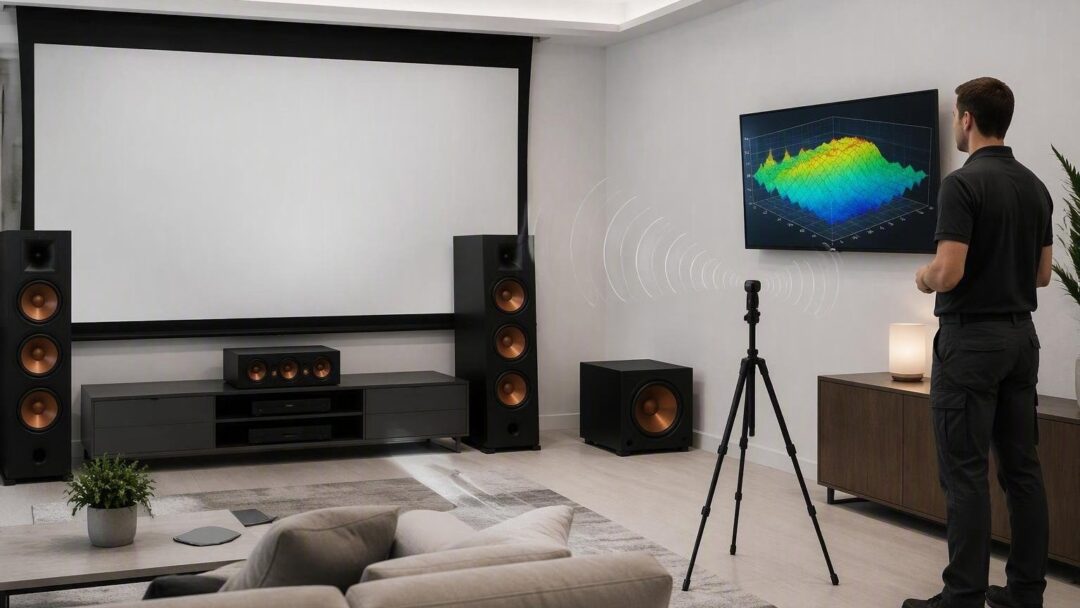
Home theaters have become increasingly popular, and one of the most critical aspects of creating an immersive experience is optimizing the sound. Room acoustics play a significant role in achieving high-quality sound reproduction. The shape, size, and construction of the room can either enhance or detract from the sound quality. To address these issues, correction algorithms like Dirac Live and Trinnov have been developed to calibrate and optimize the sound system.
These algorithms work by analyzing the room’s acoustic properties and adjusting the sound output accordingly. The process involves mic placement where a microphone is positioned in the listening area to capture the sound reflections and resonances. The algorithm then uses this data to create a target curve which serves as a reference for the optimal sound response.
Calibration Workflow
The calibration process typically involves the following steps:
- Positioning the microphone in the listening area to capture the sound reflections and resonances.
- Running the calibration software to analyze the room’s acoustic properties and create a target curve.
- Adjusting the sound system’s settings to match the target curve, which may involve tweaking the equalization and crossover settings.
It’s essential to avoid common pitfalls, such as inadequate mic placement or insufficient calibration which can lead to suboptimal sound quality. By following the calibration workflow and using correction algorithms like Dirac Live and Trinnov, homeowners can achieve a more immersive and engaging home theater experience.
Target Curves and Common Pitfalls
A target curve is a critical component of the calibration process, as it serves as a reference for the optimal sound response. However, creating an accurate target curve can be challenging, especially in rooms with complex acoustic properties. To avoid common pitfalls, it’s essential to carefully position the microphone and run multiple calibration iterations to ensure accurate results.
Dirac Live and Trinnov Correction Algorithms
Dirac Live and Trinnov are two popular correction algorithms used in home theaters. These algorithms use advanced signal processing techniques to analyze the room’s acoustic properties and adjust the sound output accordingly. By using these algorithms, homeowners can achieve a more accurate and immersive sound reproduction, with improved bass response and soundstage.


