
The latest work by Sophy Romvari, Blue Heron, continues the filmmaker’s long-standing investigation into family history and the traces left behind by trauma. Known for shorts like Nine Behind and essayistic pieces such as Still Processing, Romvari returns to the territory of intimate inquiry with a fiction that feels like a reconstructed archive. The film follows a Hungarian immigrant family in the suburbs outside Vancouver and moves between a child’s uncertain recollection and a later attempt to understand what happened. Romvari’s method is less about explicit answers than about the ways images, sounds, and silences accumulate meaning.
Formally restrained and attentive to texture, Blue Heron stakes its emotional authority in small, carefully observed gestures. The protagonist’s memory frames the film: young Sasha’s impressions and adult Sasha’s reconstruction are the twin poles through which the story is felt. The production recreates the domestic world of the 1990s with meticulous care, from wardrobe to background television, and Romvari resists turning details into nostalgia; instead, she treats them as evidence of a life that was lived and then quietly altered by loss. The film premiered at the 2026 Locarno film festival and opens in theaters on April 17.
Personal archaeology and the ethics of recollection
At the heart of Romvari’s cinema is an impulse to excavate. Where other filmmakers might foreground explanation, Romvari practices what could be called an archival empathy: objects, photographs, and home video fragments are not simply props but witnesses to a family’s uneven interior life. Her previous short films—works like Grandma’s House and Remembrance of József Romvári—have treated relatives and domestic spaces as sites of testimony, and in Blue Heron that approach becomes narrative. The film avoids sensationalizing dysfunction; instead, it holds a series of domestic moments up to the light, letting the audience observe how ordinary routines conceal fractures.
Recreating a time and place
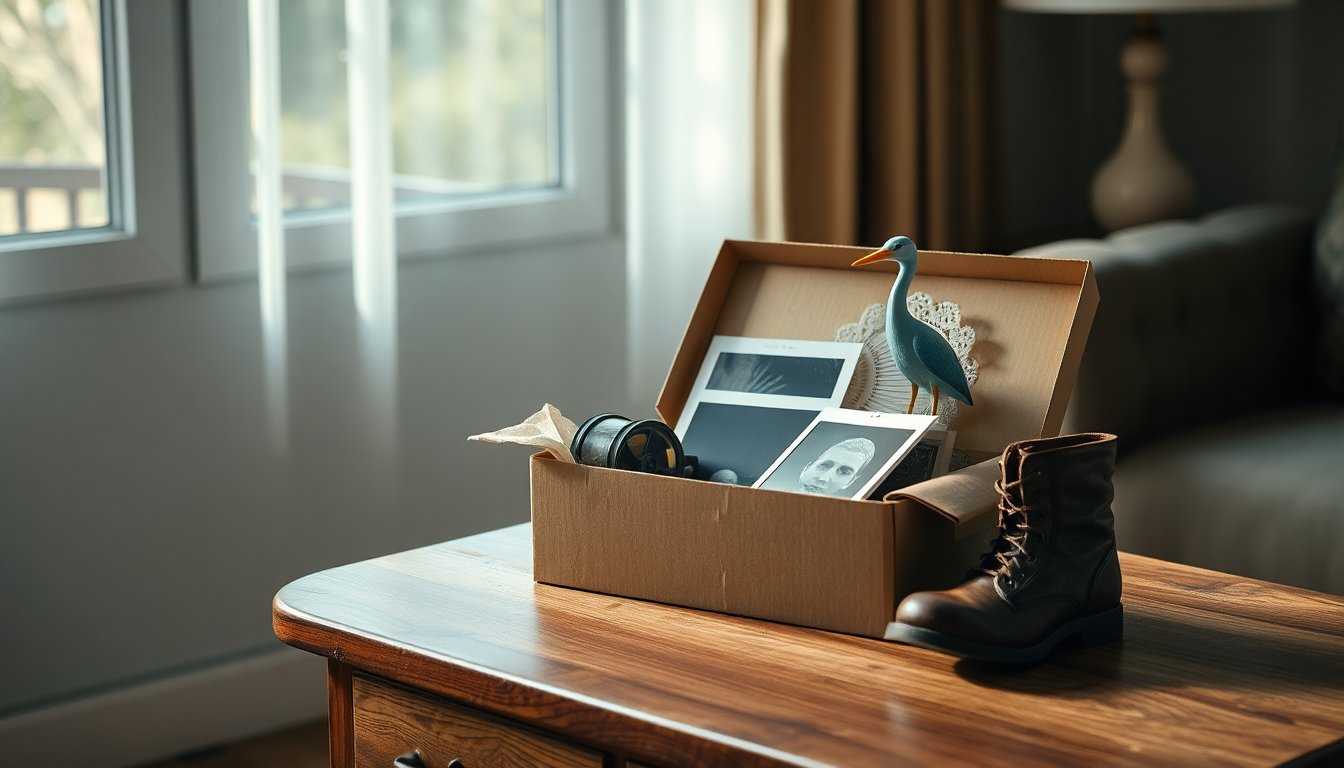
The film’s attention to period detail is not decorative. Production designer Victoria Furuya and Romvari assemble a sensory world—cartoons from television, the hum of household appliances, clothing textures—that reads as an inhabited chronology. Those elements function as anchors for memory rather than mere period markers. There is a kind of melancholic authority to watching a family record itself on camera: the presence of home video and parental snapshots becomes a theme in itself, a record of attempts to preserve joy even as trouble grows. Romvari interrogates that preservation with compassion rather than accusation.
Point of view, camera choices, and the shape of silence
Visually, Blue Heron refuses easy intimacy and yet insists on proximity to feeling. With cinematography by Maya Bankovic, Romvari often positions the lens outside domestic thresholds—through windows or across doorways—allowing the mise-en-scène to breathe. The camera’s occasional pushes and zooms feel less like voyeurism than like the effort to reenter a sealed room of memory. This measured distance mirrors the film’s thematic concern: how do you make sense of another person’s suffering when so much of it was kept private? Jeremy, played by Edik Beddoes, is presented as an enigma rather than a case study; the film resists pathologizing his behavior and instead invites patient, uncertain attention.
From childhood impressions to adult investigation
Structurally, the film splits into a childhood section and a later sequence in which adult Sasha, now a filmmaker, tries to piece together what led to Jeremy’s decline. This narrative maneuver transforms the movie into an investigative reconstruction: conversations with friends, recordings of social workers, and Sasha’s own interviews serve as fragments that rarely cohere into neat explanations. Romvari stages these scenes with unusual humility; professionals’ explanations land as provisional and evasive—”it’s hard to tell”—and the film refuses to substitute cinematic certainty for the ambiguities of real life.
Conclusion: restraint as revelation
Where some movies demand closure, Blue Heron achieves its power by keeping questions alive. The film’s final sequences layer time and memory, turning a family gathering into something like a communal séance where the past briefly occupies the present. Romvari’s restraint—her choice to withhold explicit exposition and to allow silence and absence to speak—creates a kind of empathy that feels earned. For viewers familiar with her earlier work, this feature consolidates an aesthetic: a blend of documentary sensibility, autobiographical concern, and fictional reanimation. It’s an intimate, deliberate film whose effects linger long after the credits roll.
Blue Heron premiered at the 2026 Locarno Film Festival and invites viewers into a careful study of memory, family, and the limits of representation. Whether experienced as a personal chronicle or as a formally controlled drama, Romvari’s debut continues her probing into how images hold and obscure the lives they claim to preserve.


